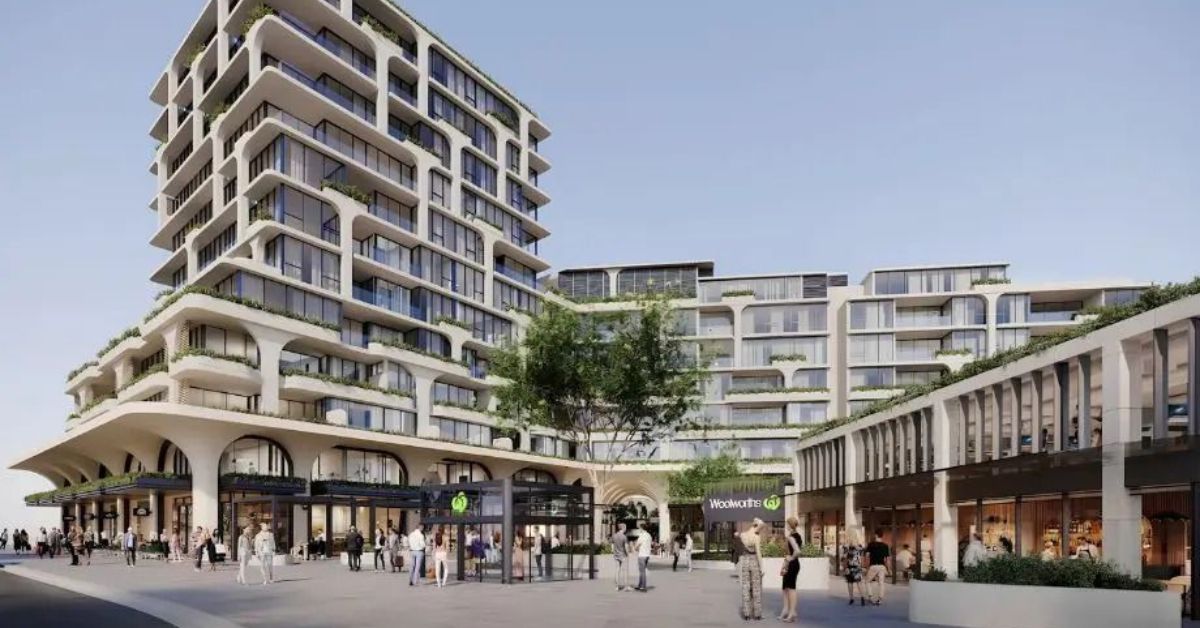
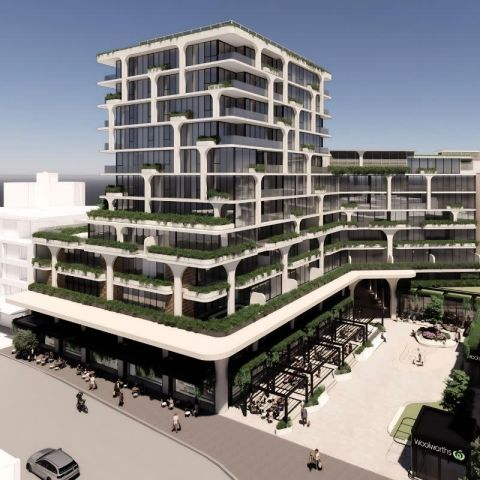
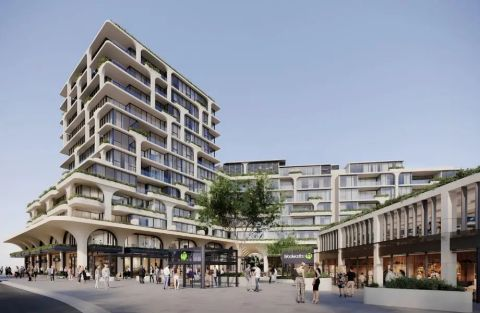
Woolworths Group‘s development arm Fabcot has secured approval for a $191 million mixed-use project in Neutral Bay, bringing a 12-storey building to the Lower North Shore site that will bury the supermarket below ground and replace it with a new street-level plaza, retail, a medical centre and 97 apartments.
Approval was granted in May, three days after a Housing Delivery Authority rezoning lifted height controls on the 4,207-square-metre site, clearing the way for a project that caps a six-year push by Fabcot through a series of planning obstacles.
It is the first project in North Sydney to receive Housing Delivery Authority rezoning and State Significant Development approval at the same time, something Woolworths Group national general manager of mixed-use development Pierre Abrahamse said could help open the door for more projects across the area
The project is designed by Koichi Takada Architects and is scheduled to begin construction in 2026, with completion targeted for 2029.
Six years from proposal to approval
Fabcot first approached the planning process in 2020, engaging with the Military Road corridor and the Neutral Bay town centre with a scheme that was refused twice at the local level before being escalated to a state rezoning review and eventually the HDA pathway.
The earlier proposal had been shaped around a part-six and part-eight-storey scheme of approximately 62 apartments, a 1.8:1 minimum non-residential floor-space ratio and around 372 basement car spaces. The approved scheme is considerably more ambitious.
Height controls lifted from 26 metres and 31 metres to 31 metres and 44 metres under the HDA rezoning, and the minimum non-residential floor-space ratio fell to 1.5:1. The result is a taller, more mixed-use project with significantly more apartments, more commercial space and a stronger contribution to Neutral Bay’s public domain.
Local opposition remained strong throughout the process. Thirty of the 46 public submissions objected to the project, raising concerns about traffic, height, overshadowing, parking, affordable housing and the treatment of the Yeo Street boundary.
The state planning department backed the project, finding the site sat within the Neutral Bay town centre where greater height and mixed-use renewal were expected, noting that similar nine to 14-storey buildings already existed within 250 metres.
A closer look at the proposal
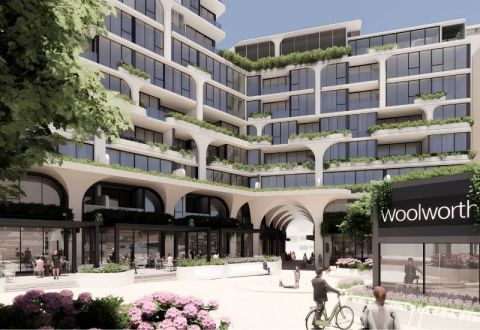
The approved scheme stacks a significant amount of program into a single building. At the base, a 1,100-square-metre plaza links Rangers Road, Yeo Street and Military Lane, creating a new piece of publicly accessible outdoor space in the heart of the commercial precinct.
Ten ground-floor retail tenancies activate the street edge, while the Woolworths supermarket moves to an underground position, freeing the street level for outdoor dining and movement.
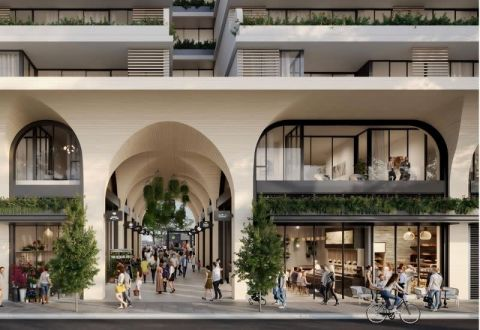
Levels one to three house a medical centre providing a new health services anchor for the suburb. Above that sit 87 market apartments and 10 affordable apartments to be maintained at that tenure for 15 years, spread across a mix of one, two, three and four-bedroom configurations.
The commercial component totals 6,575 square metres, while a covered through-site link from Yeo Street, eight metres wide and six metres high, provides weather-protected pedestrian movement through the site. The department accepted the covered link over the local preference for an open-to-sky break, finding the dimensions provided sufficient visual relief.
A suburb built around Military Road
Military Road became Neutral Bay’s commercial spine from the early 1870s, when a track running along the ridge from North Sydney towards Middle Head fortifications gradually attracted shops and businesses along its length. The suburb, known to the Cammeraygal people as Wirra-birra, was declared a neutral harbour by Governor Arthur Phillip in 1789 for foreign ships visiting Port Jackson.
The Military Road corridor has since evolved through trams, department stores, the Big Bear supermarket and decades of mixed commercial development, with mixed-use apartment buildings replacing earlier low-rise shopping strips across recent decades. The Fabcot project continues that long trajectory, this time at a scale made possible by the state’s housing fast-track framework.
The project will generate 263 construction jobs and 143 operational jobs on completion. Consent conditions include groundwater testing, wind, traffic, landscaping and construction management requirements before a construction certificate can be issued.
Published 18-May-2026